
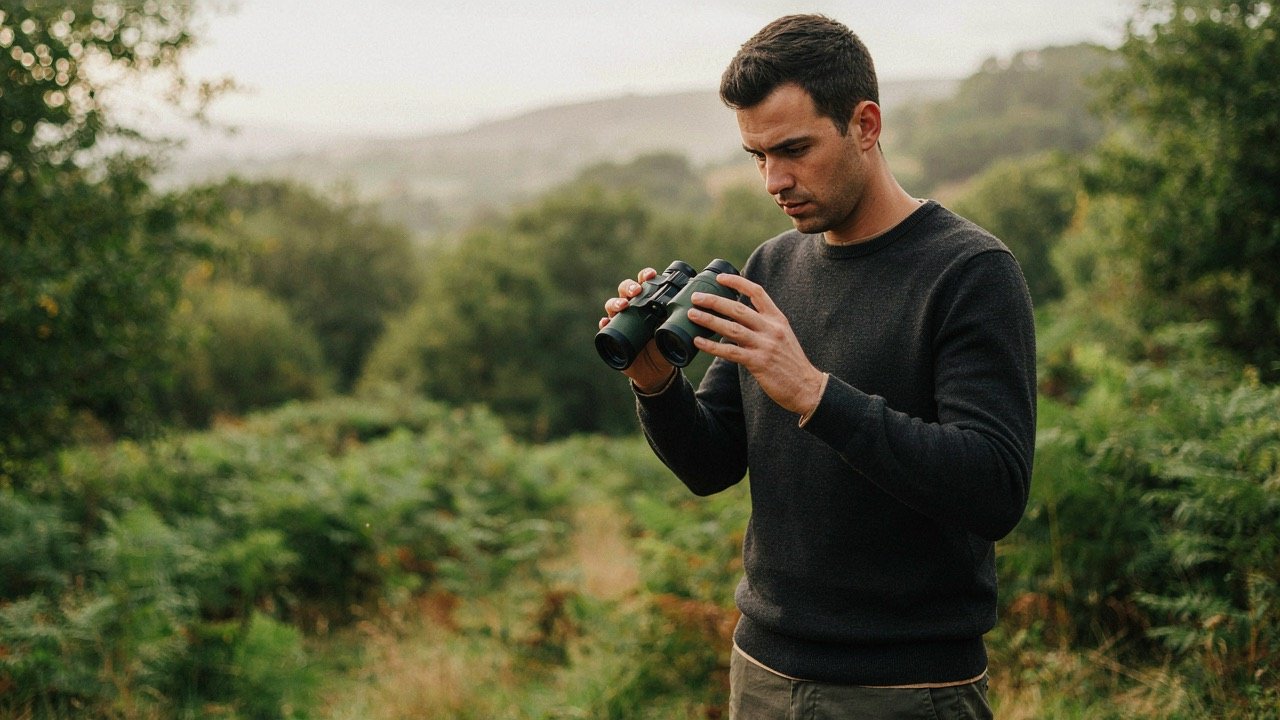
Binoculars can last for decades, so it is worth choosing carefully. Specifications can be confusing, and two pairs that look similar can perform very differently. Use this checklist to compare models with confidence.
1. Magnification and lens size
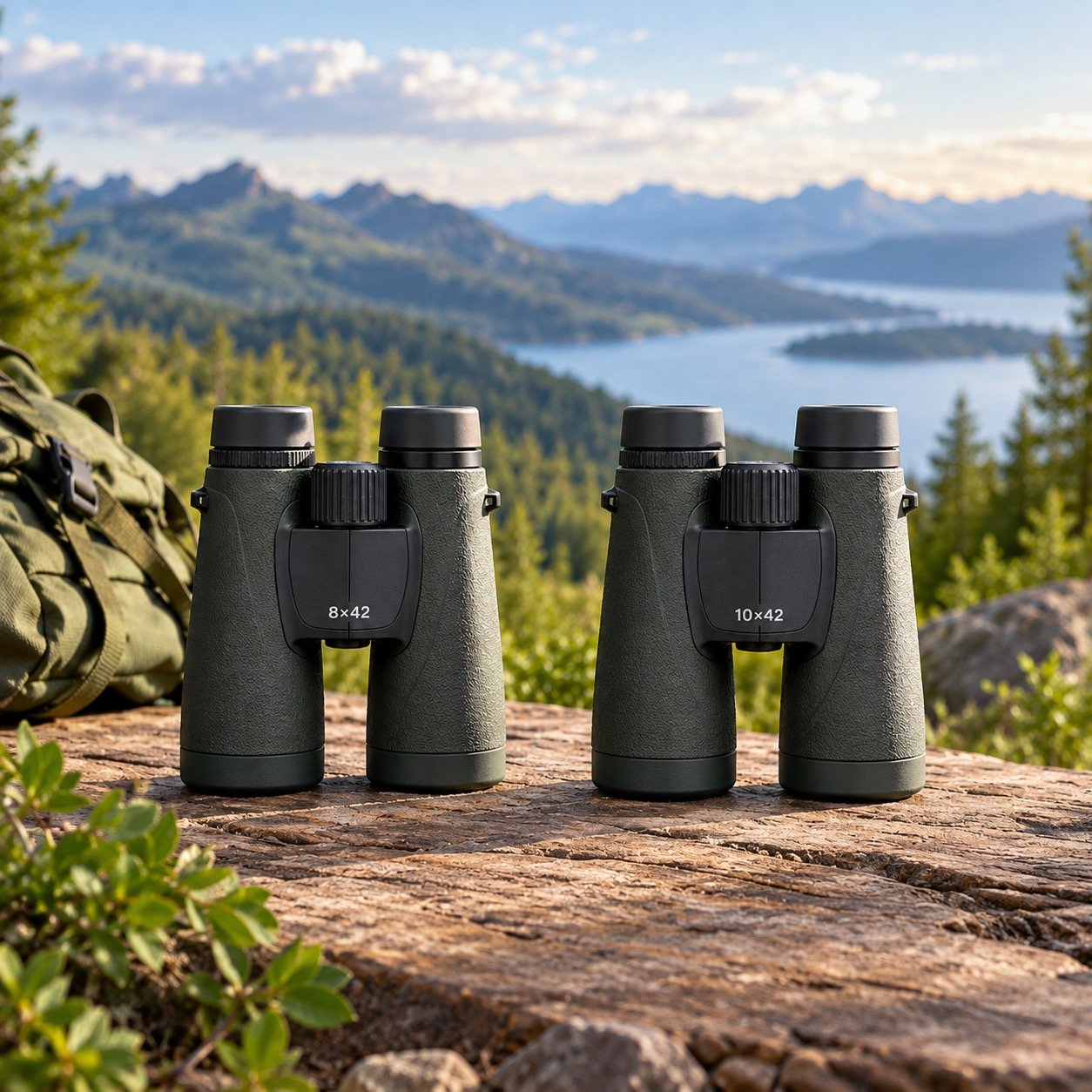
The name, for example 8×42, tells you the magnification and the diameter of the front lenses. For general wildlife watching and safaris, 8×42 is the most versatile format. Read our guide to 8×42 and 10×42 binoculars for a detailed comparison.
2. Field of view
Field of view tells you how wide a scene you see, usually in metres at 1,000 metres. Compare it between models with the same magnification: a wider field makes it easier to find and follow moving wildlife.
3. Glass
The glass in the lenses and prisms has a big effect on sharpness and colour. ED (extra-low dispersion) glass reduces chromatic aberration, the purple or green fringing you can see around high-contrast edges. It produces cleaner, more natural colour, particularly noticeable with birds against a bright sky.
4. Coatings
Every glass surface reflects some light. Coatings reduce those reflections so more light reaches your eyes, which makes the image brighter and more contrasty. In roof-prism binoculars, phase coatings on the prisms keep light waves in step, which improves resolution and contrast. Light transmittance, the share of light that makes it through the binocular, is a useful single number for comparing brightness when a manufacturer publishes it.
5. Build and weatherproofing
Look at what the body is made of and how it is sealed. Metal bodies such as magnesium alloy are strong and rigid; high-strength polymer bodies can be lighter. Fully waterproof binoculars are sealed against rain and humidity. Many manufacturers also fill their binoculars with dry nitrogen or argon gas to prevent internal fogging, so ask whether a model you are considering is gas-filled.
6. Weight and handling
Check the weight and how the binocular balances in your hands. A lighter pair is more likely to come with you every day; a heavier pair can feel steadier. Turn the focus wheel: it should move smoothly, without slack.
7. Comfort for glasses wearers
If you wear glasses, check that the eyecups twist down and that you can see the whole image without dark edges. This is determined by the eye relief of the design.
8. Questions to ask before you buy
- What glass and coatings does it use?
- What is the field of view and the weight?
- Is it fully waterproof?
- What is included in the box?
- What warranty and after-sales support are offered?
Our team is happy to answer all of these for the Tembo Explorer and Tembo Pro.